Trump, Xi, and Putin Set for Historic Shenzhen Summit Amid Viral ‘Three-Empire’ Geopolitical Map Debate
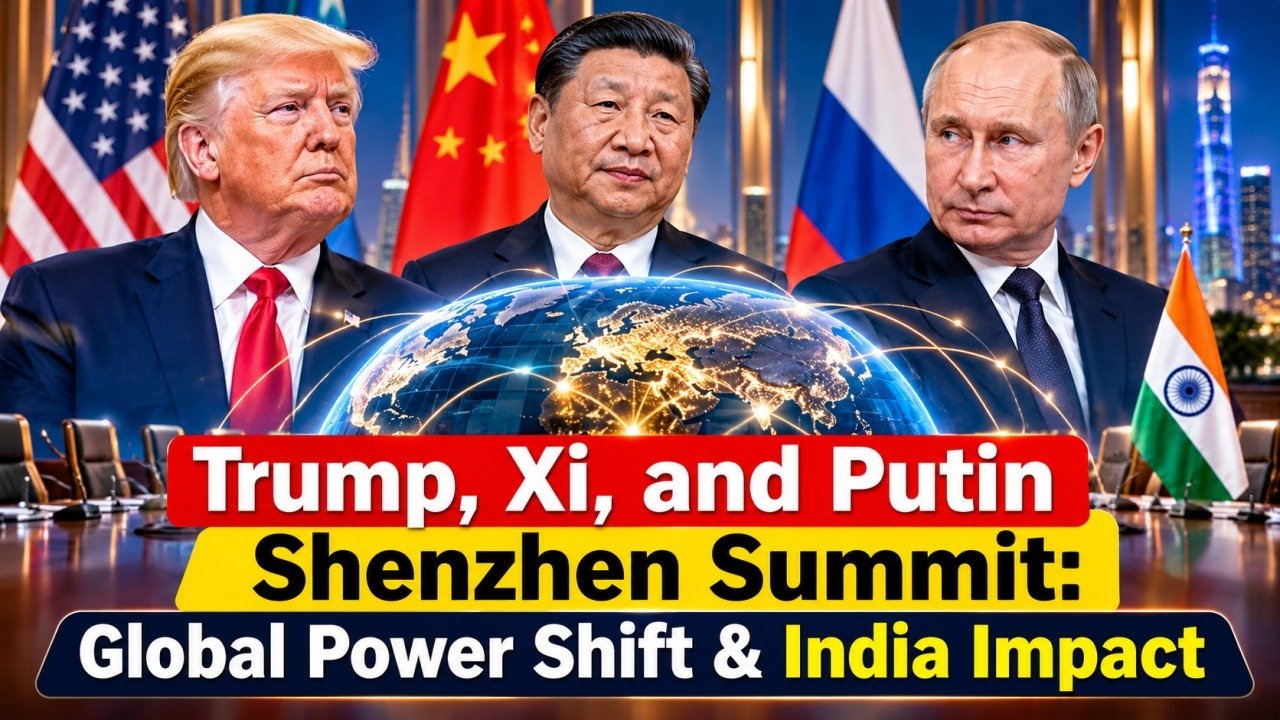
Global diplomatic attention is centered on southern China this week as US President Donald Trump, Chinese President Xi Jinping, and Russian President Vladimir Putin prepare for an unprecedented trilateral meeting in Shenzhen. Scheduled for Thursday, November 19, 2026, on the sidelines of the Asia-Pacific Economic Cooperation (APEC) Economic Leaders’ Meeting, the gathering marks the first time in modern history that the sitting leaders of the United States, Russia, and China will sit down together for formal talks, as reported by The Hindu and France 24.
Ahead of the summit, a controversial social media map shared by Russian political theorist Alexander Dugin—often cited in geopolitical discussions around Moscow—sparked widespread online debate. As analyzed by geopolitical commentator Prashant Dhawan in a recent video breakdown, Dugin’s speculative map divided the globe into three major spheres of influence: an American sphere covering North and South America alongside Japan; a Russian sphere spanning Europe, the Middle East, and Africa; and a Chinese sphere encompassing most of Asia, including India and Australia.
Why Analysts Reject the ‘Three-Empire’ Assumption for India
Security analysts emphasize that Dugin’s viral graphic reflects a fringe ideological concept rather than geopolitical reality:
- Strategic Autonomy: India maintains independent economic, defense, and diplomatic partnerships across Washington, Moscow, and Tokyo, making any assumption of external hegemony inaccurate.
- Economic Influence Over Conquest: Geopolitical observers note that modern great-power competition relies on trade leverage, energy supply chains, and security alliances rather than formal territorial empires.
Key Agendas in Shenzhen: Iran, Nuclear Arms, and Trade
According to international coverage by CNBC and policy assessments from the Brookings Institution, each leader brings distinct priorities to Shenzhen:
- United States: President Trump aims to discuss de-escalation frameworks involving Iran, review the US-China tariff truce ahead of its January deadline, and push for trilateral nuclear arms control talks following the February 2026 expiration of the U.S.-Russia New START Treaty.
- China and Russia: Hosting both leaders elevates Beijing’s role as a central diplomatic broker, while Moscow seeks sanctions relief and diplomatic leverage over the ongoing Ukraine conflict.
Quad Summit in Manila and Impact on Asian Allies
Before traveling to China, President Trump is attending the Quad Leaders’ Summit in Manila, Philippines, on November 17 alongside Indian Prime Minister Narendra Modi, Australian Prime Minister Anthony Albanese, and Japanese Prime Minister Sanae Takaichi, as covered by DW News. Analysts note that Asian partners—including Japan, South Korea, and ASEAN nations—are closely watching whether Washington balances its direct outreach to Beijing and Moscow with firm Indo-Pacific security commitments.
Source:The Hindu, France 24, CNBC, Brookings Institution, U.S. Department of State, Asia-Pacific Economic Cooperation (APEC), Prashant Dhawan Analysis (YouTube)