Ukraine Peace Talks Update: Zelenskyy Reveals US Proposal Trading Donbas Territory for NATO Membership After Abu Dhabi Discussions
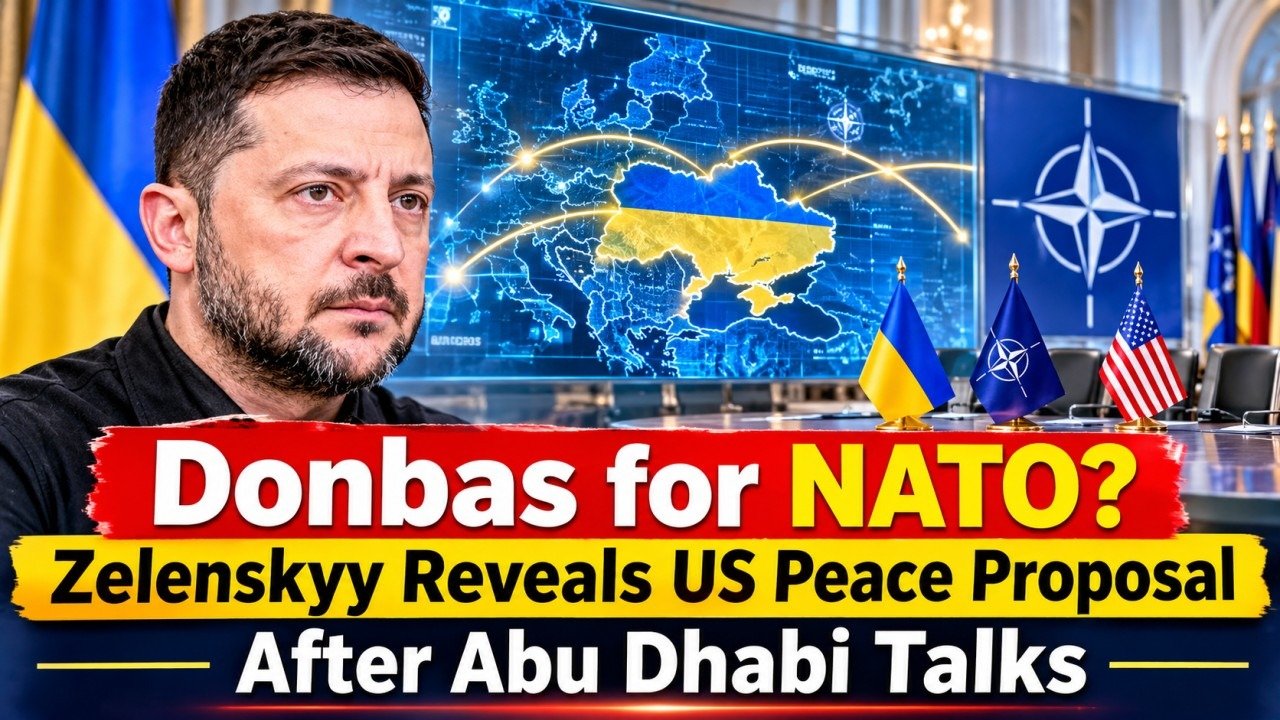
Ukrainian President Volodymyr Zelenskyy has disclosed details of a controversial peace framework presented by US envoys Steve Witkoff and Jared Kushner following diplomatic talks in Abu Dhabi and Moscow. As detailed in international diplomatic coverage by Reuters and analyzed by educator Ankit Avasthi on Ankit Inspires India, Washington’s mediators relayed a Russian-linked proposal suggesting Kyiv cede full control of the eastern Donbas region in exchange for a pathway toward NATO membership and a ceasefire.
The proposal followed trilateral discussions in Abu Dhabi earlier this month, after which Witkoff and Kushner met Russian President Vladimir Putin in Moscow on November 12 before briefing Zelenskyy in Kyiv on November 13, 2026.
Why Donbas Remains Central to the Conflict
The Donbas region—comprising the industrial Donetsk and Luhansk provinces—is Ukraine’s traditional coal and steel heartland. While Russian forces currently occupy roughly 18.5% of Ukraine’s total territory—including Crimea (annexed in 2014) and parts of Zaporizhzhia and Kherson—Ukrainian troops still hold about 18% to 20% of the Donbas area. Moscow’s proposal seeks full Ukrainian withdrawal from the remaining territory in Donetsk and Luhansk without committing to return other occupied regions.
Zelenskyy’s Constitutional Stand and European Concerns
Zelenskyy rejected the idea of unilaterally surrendering Ukrainian territory, pointing to strict legal and public constraints:
- Constitutional Referendum Requirement: Under Article 73 of the Constitution of Ukraine, any alteration to Ukraine’s national territory can only be resolved through an all-Ukrainian referendum approved by citizens.
- Public Opposition: Recent domestic polling cited by analysts indicates that roughly 66% of Ukrainians oppose ceding land to Russia, even as a growing share favors exploring diplomatic avenues to end the war.
- NATO Consensus Hurdles: According to official NATO Enlargement Guidelines, admitting a new member requires unanimous approval from all 32 allied nations—a consensus that remains uncertain while active hostilities persist.
Meanwhile, European officials, including EU foreign policy chief Kaja Kallas, have warned against bilateral deals negotiated without direct European Union participation, arguing that Moscow has historically resisted NATO’s post-1997 expansion and cannot be trusted to honor partial territorial compromises.
Source:Reuters, Constitution of Ukraine (Official Portal), NATO Official Portal