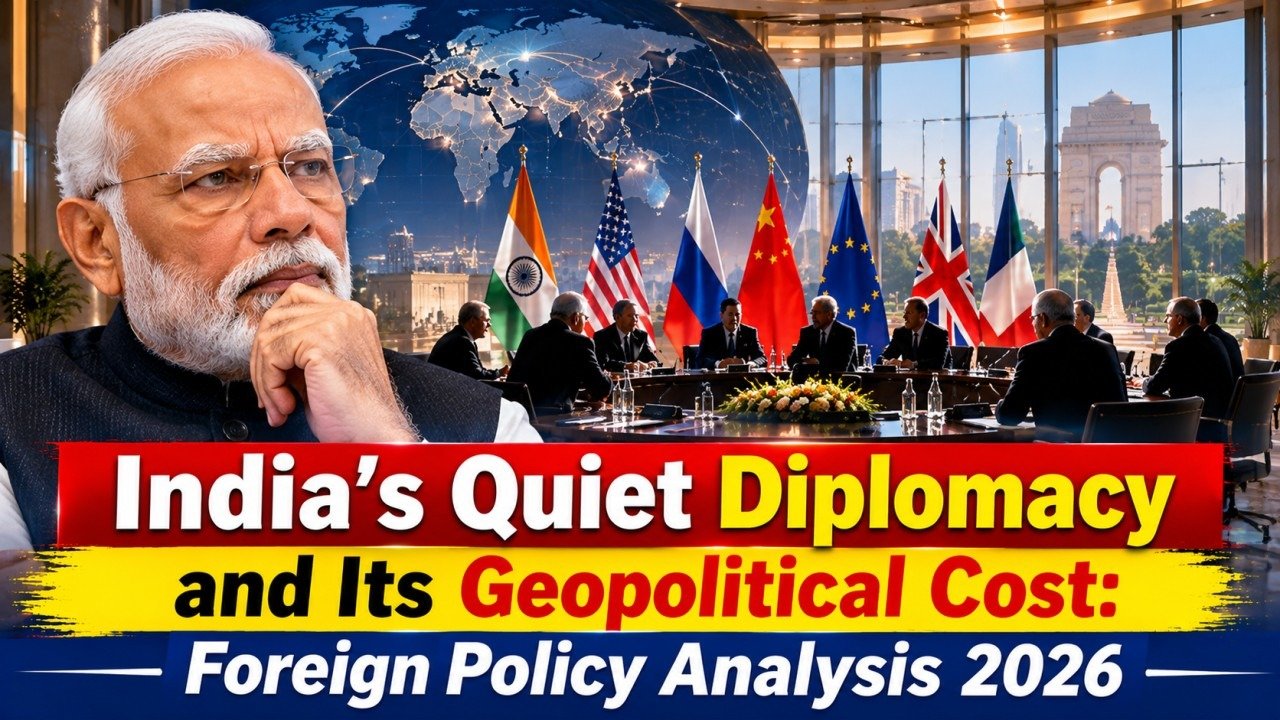
In international politics, silence is often viewed as a mark of strategic prudence. However, when major global powers unilaterally disregard established norms, does a posture of “quiet diplomacy” begin to carry a steep geopolitical price? A recent analysis by Study Glows, alongside a prominent geopolitical commentary published in The Times of India, examines the deeper implications and long-term risks of India’s restrained foreign policy approach.
Recent Flashpoints Behind India’s Restrained Posture
Amid shifting global power dynamics, New Delhi has consistently favored behind-the-scenes negotiation over public confrontation. Several recent developments highlight this strategic choice:
- US-Russia Energy Deals and Tariff Pressures: Despite Washington announcing a deal last month to purchase diesel from Moscow, it has maintained tariff threats and pressure on India over its Russian oil imports. The Ministry of External Affairs (MEA) has largely refrained from issuing a sharp public rebuke against this apparent double standard.
- Global Conflicts and Diplomatic Discretion: From military escalations in the Middle East and strikes involving Iran to political upheavals in Venezuela, India has avoided overt condemnation. Even at global forums like the United Nations, New Delhi has often opted for indirect diplomatic phrasing rather than naming adversaries directly.
- China’s Assertiveness vs. India’s Pragmatism: While China leverages its dominance over rare earth elements and global supply chains to push back forcefully against Western pressure, India has prioritized protecting its vast bilateral trade stakes, defense partnerships, and the interests of the Indian diaspora abroad—choosing silent engagement over public spats.
The Geopolitical Cost and Future Challenges
Foreign policy analysts caution that while avoiding unnecessary public friction is prudent, habitual silence in the face of unilateral actions by major powers can erode India’s credibility as a principled global voice and champion of the Global South. Upholding a rules-based international order requires clear moral and strategic positioning beyond immediate bilateral gains; otherwise, global diplomacy risks sliding into a precedent where might makes right.
Source: https://www.mea.gov.in/