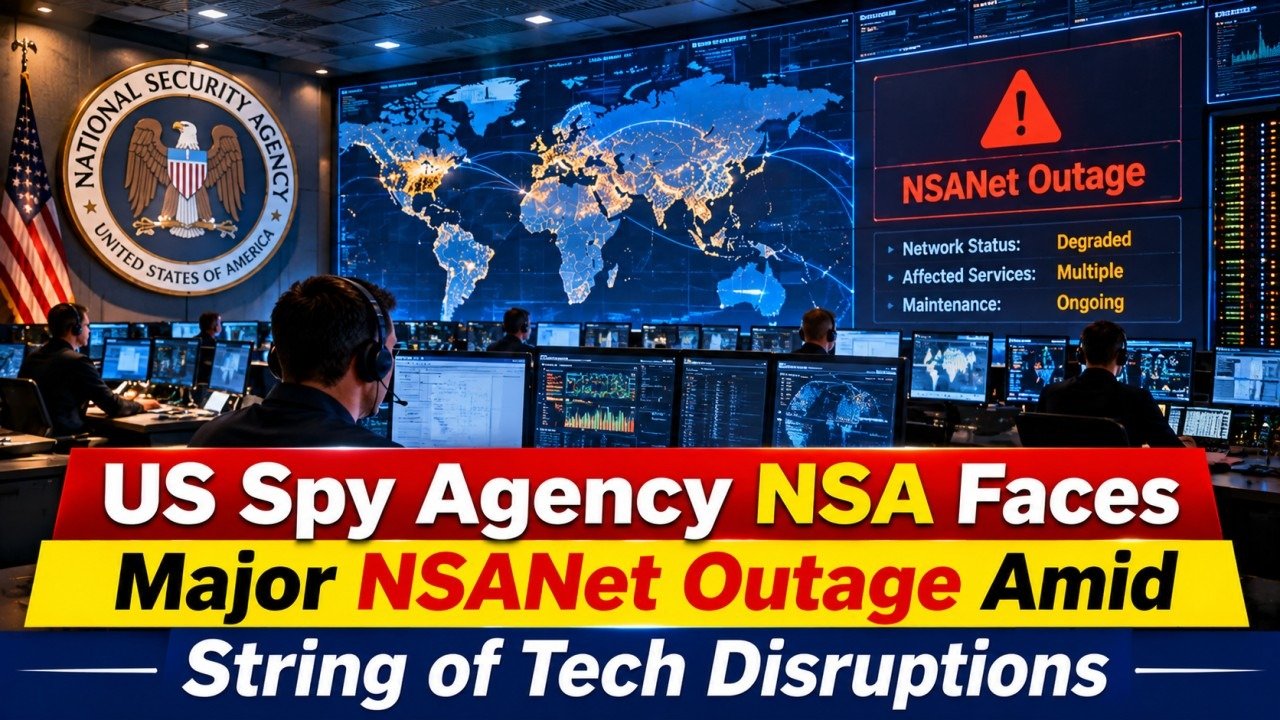
The classified internal communications network of the U.S. National Security Agency (NSA) suffered a significant outage on November 17, 2026, temporarily disrupting internal intelligence-sharing systems at one of the world’s most powerful espionage organizations. The breakdown hit NSANet—the agency’s core secure network used by personnel to transmit top-secret intelligence and coordinate operations—prompting leadership at its Fort Meade, Maryland headquarters to introduce staggered arrival times for staff.
Routine Maintenance or Systemic Vulnerability?
Following initial reports by CNN, NSA officials confirmed that the agency experienced “temporary degradation during scheduled routine maintenance” and software patching, while emphasizing that mission-critical national security capabilities and Five Eyes alliance intelligence-sharing channels remained fully operational. The White House and defense officials stated there is no evidence of a foreign cyberattack, noting that multi-layered backup systems ensured uninterrupted intelligence briefings for President Donald Trump during his high-stakes diplomatic trip to Asia, which includes upcoming trilateral talks with Chinese President Xi Jinping and Russian President Vladimir Putin.
Despite official assurances, the timing has raised alarms among cybersecurity analysts. The NSANet failure caps a tumultuous week of widespread digital disruptions across critical American infrastructure:
- Aviation Paralysis: Last Friday, a single router malfunction in Arkansas triggered a nationwide Federal Aviation Administration (FAA) ground stop, delaying or canceling thousands of flights.
- Corporate & Financial Blackouts: A global Microsoft 365 software bug disrupted Outlook and Teams services across dozens of countries, followed by service glitches at major financial institutions like JPMorgan Chase and tech giant Apple.
Key Takeaways for India’s National Security Infrastructure
The incident underscores that even the most heavily fortified intelligence networks are vulnerable to cascading technical failures. For Indian strategic and cybersecurity bodies—such as the Research and Analysis Wing (R&AW), the National Technical Research Organisation (NTRO), and the Indian Computer Emergency Response Team (CERT-In)—the disruption reinforces the necessity of independent backup communication channels, rigorous patch-management protocols, and continuous insider-threat monitoring to safeguard national security infrastructure