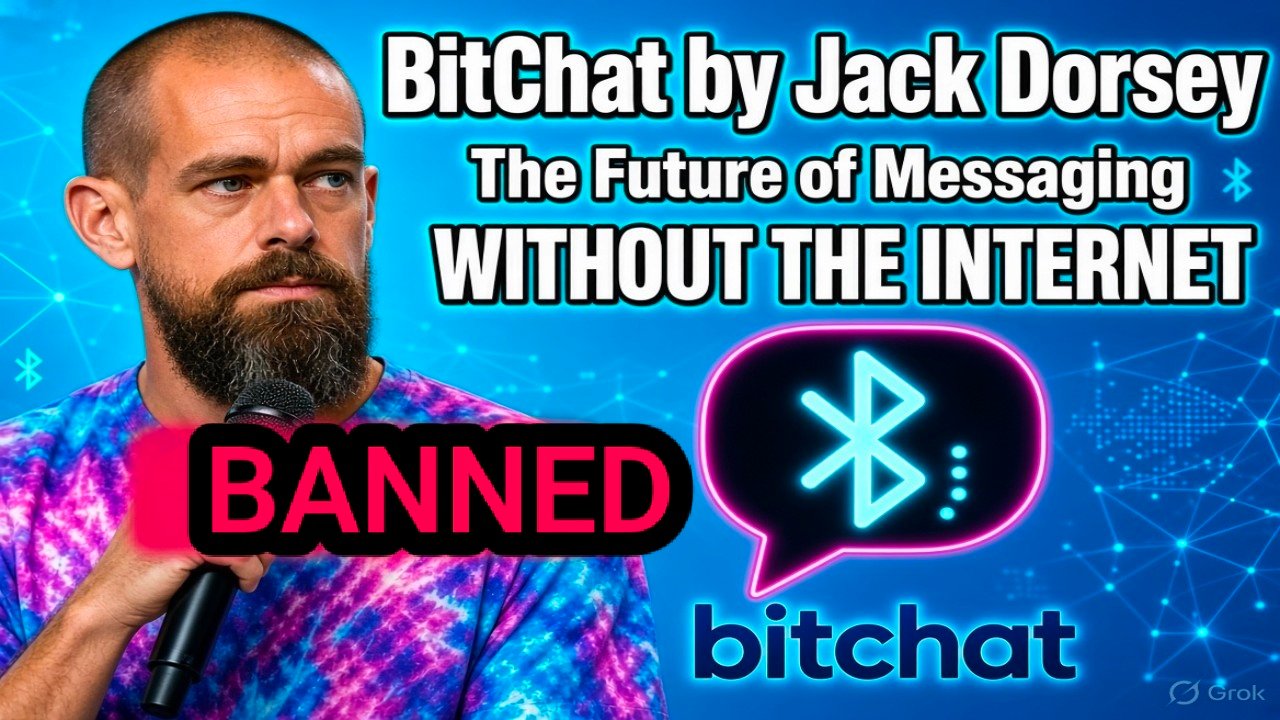
NEW DELHI — In a major move surrounding digital communication and state oversight, the government has ordered the removal of the offline messaging application Bitchaat (also known as Bitcat) from major platforms, including Apple’s App Store, Google Play Store, and GitHub. The decision follows the app’s widespread use during recent public protests, sparking an intense debate over internet control, national security, and individual digital rights.
A Mesh-Network Beyond Internet Control
Developed under the backing of Twitter co-founder Jack Dorsey, Bitchaat operates on a Bluetooth-based mesh networking model. Unlike traditional messaging platforms that rely on cellular data or Wi-Fi infrastructure, Bitchaat enables devices to form a direct, decentralized network. Each phone acts as a relay node within a 20-to-30-meter radius, allowing users to exchange text messages and low-bandwidth files completely offline.
In high-density urban areas, this technology creates an uninterrupted, long-range communication web—rendering traditional government internet shutdowns and network throttles entirely ineffective.
Security Concerns vs. Regulatory Limitations
Government officials cited the inability to monitor, regulate, or block illegal and harmful content as the primary rationale behind the ban under current IT framework guidelines. Because Bitchaat functions without centralized servers or internet dependency, state authorities face extreme technical hurdles in intercepting traffic.
While localized Bluetooth jammers exist, experts note that deploying them at a national scale is economically and practically unfeasible.
Enforcement Challenges and the Way Forward
Despite the regulatory ban, digital policy experts highlight significant limitations in enforcing such prohibitions. Banning an application from digital storefronts prevents new downloads but cannot automatically erase the software from devices where it is already installed. Similar to privacy tools like VPNs and Tor, decentralized technologies often see increased public interest following government restrictions.
Critics argue that blanket bans rarely eliminate underlying communication tools and may instead accelerate the development of harder-to-regulate alternatives. The situation underscores a growing need for modern legal frameworks that address emerging peer-to-peer technologies—balancing national security imperatives with fundamental rights to free communication.
Related Categories
Explore more Technology, Business & Economy, India news, and World News, on Alramika.