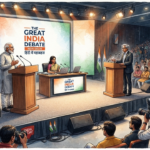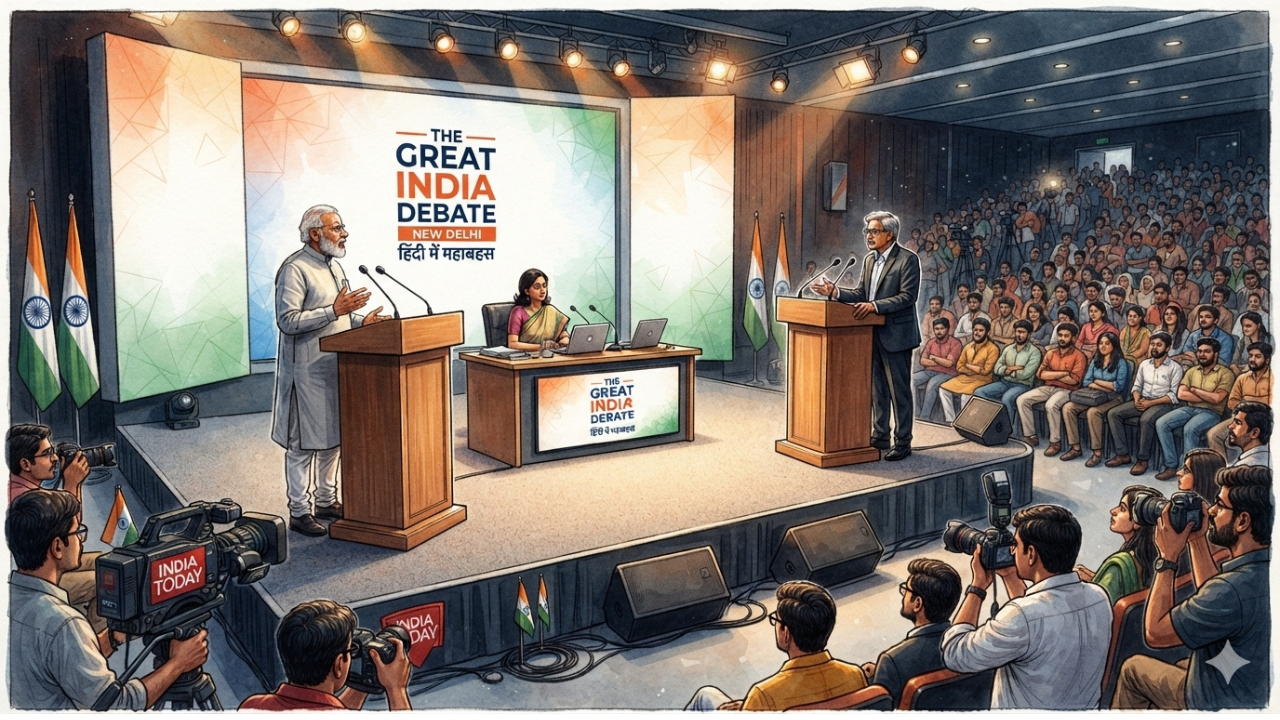
A fresh debate over political accountability in India has emerged after Congress leader Rahul Gandhi challenged Prime Minister Narendra Modi to a direct public debate. According to an analysis by StudyGlows, Gandhi issued the challenge following his remarks on November 3, inviting the Prime Minister to choose a public venue before citizens and youth to discuss issues ranging from the Special Intensive Revision (SIR) of voter rolls to vote-rigging allegations, the Epstein files, and India’s future—even suggesting RSS chief Mohan Bhagwat as a moderator.
Parliamentary Tradition vs. Live Public Debates
In response, Union Home Minister Amit Shah stated that political debates belong inside Parliament rather than on external public stages. However, political commentators note that live debates between top leaders are a standard democratic practice in countries like the United States—dating back to the 1960 Kennedy-Nixon debates—as well as the UK, Canada, Germany, France, Australia, and Argentina.
While India follows a parliamentary system rather than a presidential one, supporters of open debates argue that bringing key figures—such as Modi and Gandhi, or state leaders like Yogi Adityanath and Akhilesh Yadav—onto a neutral platform would help voters directly compare visions, policy knowledge, and facts without noisy television studio interruptions.
Analyzing the Arguments and the SIR Voter Roll Controversy
The commentary points out that both sides face distinct strengths and vulnerabilities in a face-to-face exchange:
- Opportunity for Counter-Arguments: Analysts suggest the ruling BJP has a strong opportunity to defend its governance record and challenge opposition claims on vote theft, which have faced procedural hurdles in the Supreme Court.
- Questions Over Voter Roll Verification: At the same time, critics highlight genuine public frustration regarding how the Special Intensive Revision (SIR) process has been carried out. While verifying authentic voters is widely seen as essential to prevent illegal registrations, citizens have raised concerns over cumbersome offline paperwork, repeated visits to election offices, and voter deletions, calling for smoother digital verification and transparent responses from Election Commission officials.
Ultimately, drawing on India’s ancient tradition of Shastrartha—structured, respectful intellectual dialogue—observers note that constructive public debates outside Parliament could strengthen voter awareness and democratic transparency.
Related Categories
Explore more Trending story, and World News, on Alramika.